Local History
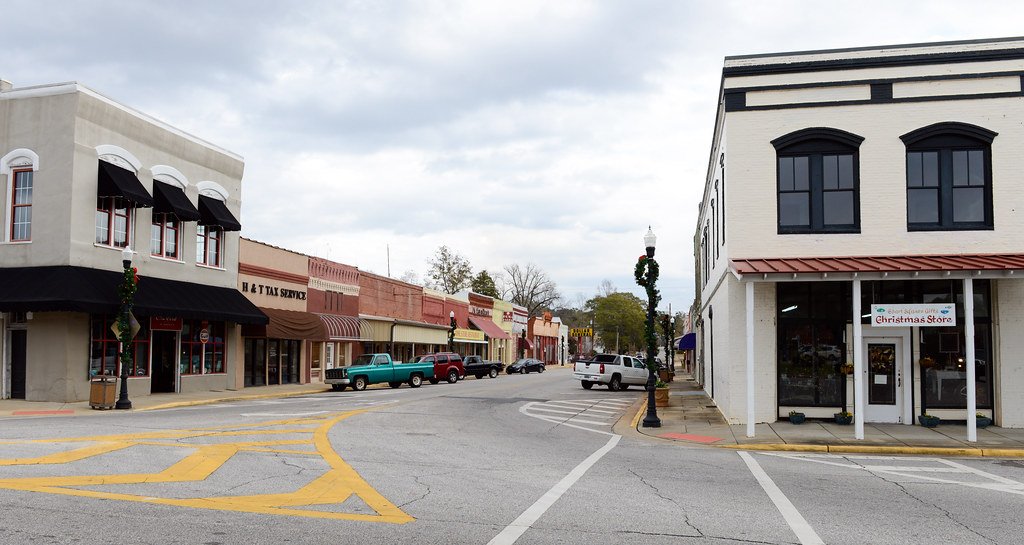
Clayton has been the heart of Barbour County for nearly two hundred years. Its courthouse square, antebellum homes, historic churches, and one very famous tombstone tell the story of a small Alabama town with a long memory.
The Town & County Library helps keep that memory alive. Whether you’re tracing your family tree, researching an old house, or just curious about the place you call home, we’re glad to help you dig in.
A Short History of Clayton
County seat of Barbour County since 1834.
Barbour County was created on December 18, 1832, from former Muscogee (Creek) homelands and part of Pike County, and named for Virginia governor James Barbour. Louisville served as the first county seat, but in 1834 a commission chose Clayton instead because it sat right in the geographic center of the county. The town was laid out around a central courthouse square, a plan you can still see today.
The Alabama Legislature incorporated Clayton on December 21, 1841, when it had about 200 residents. John Jackson served as its first mayor. As Eufaula grew into the county’s commercial center, residents debated where the seat of government belonged. In 1879 the legislature settled it by establishing courts in both towns, which is why Barbour County still has two courthouses.
Barbour County has produced six Alabama governors, and Clayton itself has been home to judges, congressmen, writers, and generations of farming families whose stories fill our local history collection.
Landmarks Worth a Visit
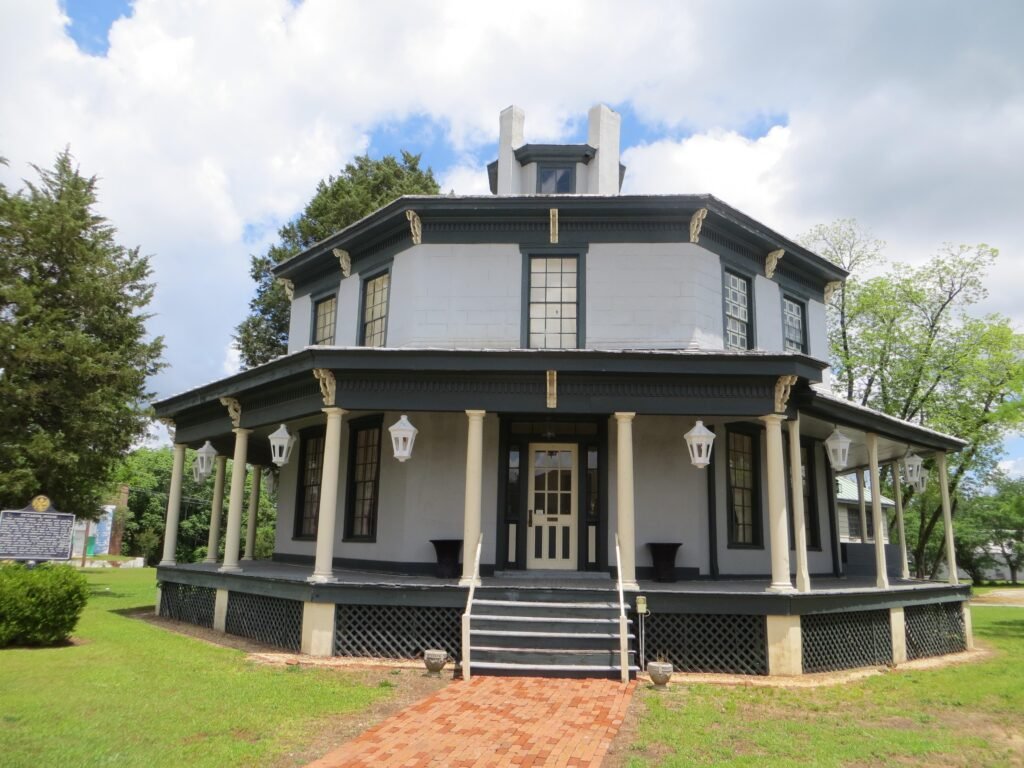
The Octagon House
Benjamin Franklin Petty, a carriage and furniture merchant originally from New York, built this eight-sided home between 1859 and 1861 after seeing an octagon house on a visit north. Its walls are 17 inches thick, and it is the only surviving antebellum octagon house in Alabama.
At the end of the Civil War, Union troops occupied Clayton and used the house as their headquarters. It was added to the National Register of Historic Places in 1974, and the Town of Clayton purchased and restored it in the 1980s. Local mystery writer Claudia Waddell Roberts, whose family later owned the home, set one of her best-known stories, “The Rusty Key,” in its basement.
103 North Midway Street. The house is owned by the town and can be toured by appointment.
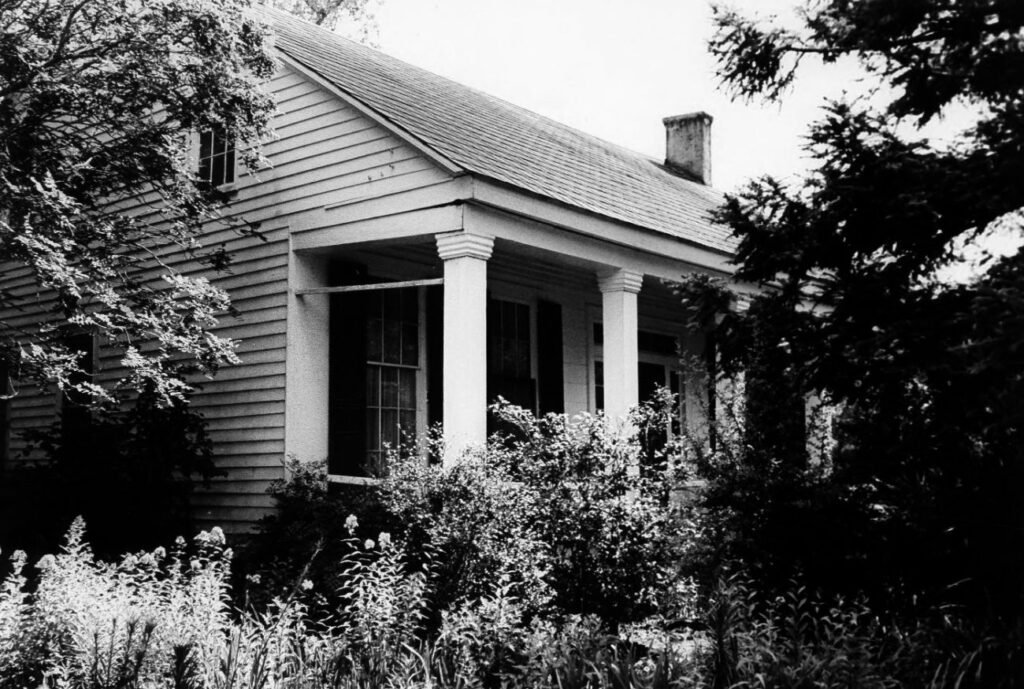
Miller-Martin Town House
John H. Miller, an early settler who came to Barbour County from South Carolina in the 1830s, built this Gothic Revival town house in 1859 on the old Clayton–Louisville road. It is one of only a handful of pre-Civil War homes still standing in Clayton and is known for the hand-painted murals on its ceilings.
In 1915 the house was bought by John Council Martin, a farmer and merchant who served as Clayton’s mayor from 1926 to 1930. It was listed on the National Register of Historic Places in 1974.
Louisville Avenue.
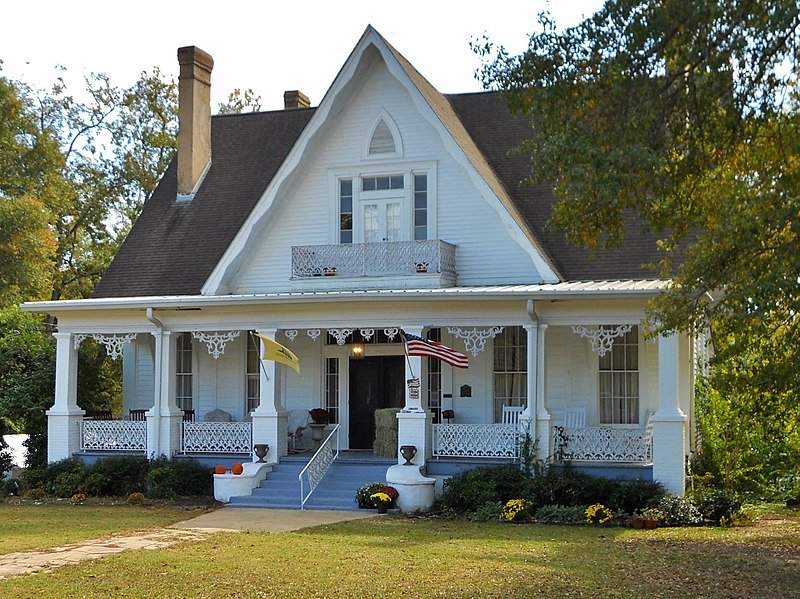
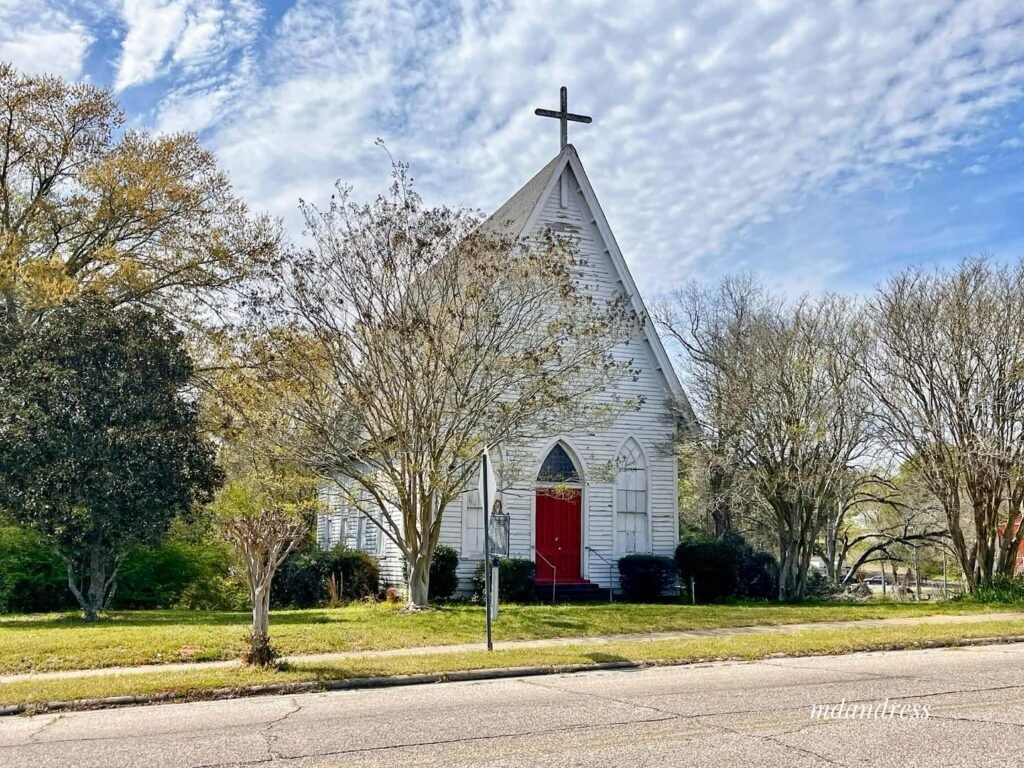
Grace Episcopal Church
Grace Church began as a mission station in 1844 and was formally accepted into the Episcopal Diocese of Alabama in 1872. The congregation built its church in 1875–1876 on a lot owned by Henry DeLamar Clayton and his wife, Victoria, just south of the courthouse square.
With its steep roof and pointed arches, the little white church is a fine example of Gothic Revival architecture. It was placed on the National Register of Historic Places in 1995.
Louisville Street, south of the courthouse square.
Henry D. Clayton House
Built around 1850, this home just south of town belonged to Henry DeLamar Clayton Sr., who later served as president of the University of Alabama. It was also the birthplace of his son, Henry DeLamar Clayton Jr., a congressman and federal judge best known as the author of the Clayton Antitrust Act of 1914, a landmark law that still shapes American business today.
The house was added to the National Register of Historic Places in 1976.
About one mile south of Clayton off State Route 30.
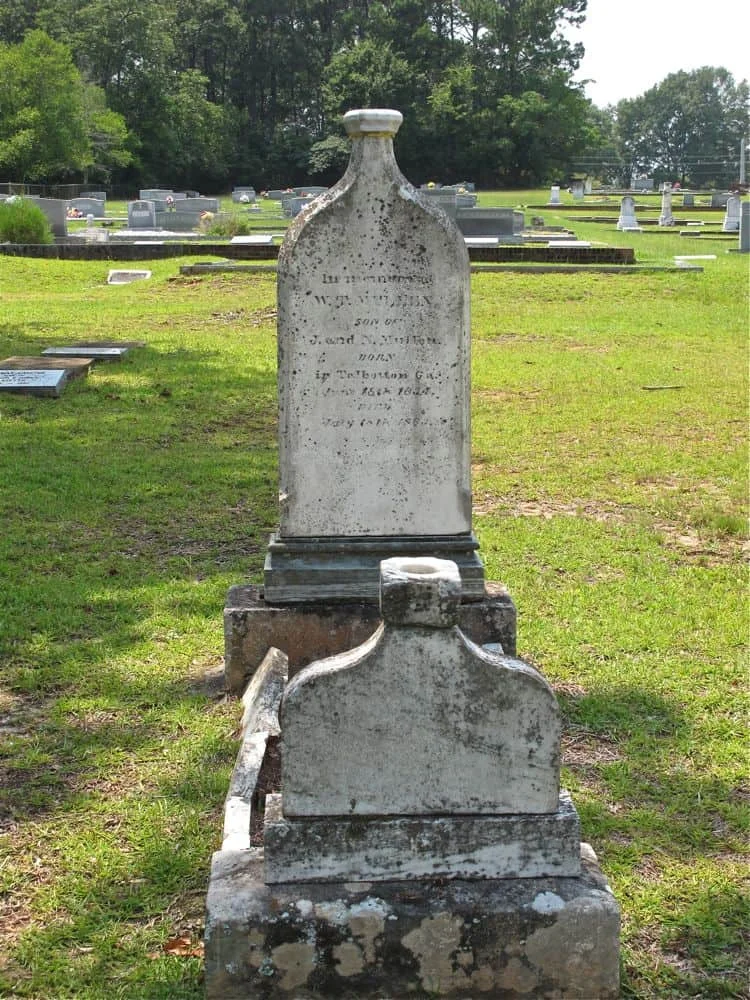
The Whiskey Bottle Tombstone
Clayton’s most famous grave belongs to William T. Mullen, who died in 1863 at age 29. As the story goes, his wife warned him that if he drank himself to death, she would mark his grave with a whiskey bottle. He did, and she kept her word. Two bottle-shaped stones, one at his head and one at his feet, mark the spot.
The tombstone was featured in Ripley’s Believe It or Not! and still draws curious visitors from all over.
Clayton City Cemetery, North Midway Street.
Research Your Family History
The library keeps local history and genealogy materials for Clayton and Barbour County, and Ancestry and HeritageQuest are free to use on our public computers. Our staff can help you get started, whether you’re looking for a census record, a church roll, or a great-grandmother’s maiden name.
Visit our Genealogy page to learn more, or join the Genealogy & Family History group on our Community Portal to swap tips with other researchers.
Every family has a story. We would love to help you find yours.
Share Your Piece of Clayton’s Past
Old photographs, church programs, school yearbooks, store ledgers, family letters: the history of a small town often lives in shoeboxes and attics.
Post what you have in Barbour County Memory on our Community Portal. We’ll help date it, put names to the faces, and keep a copy for the community archive so it’s never lost.
Good Places to Start Reading
- Backtracking in Barbour County: A Narrative of the Last Alabama Frontier by Anne Kendrick Walker (1941)
- The Heritage of Barbour County, Alabama (2001)
- History of Barbour County, Alabama by Lewy Dorman (2006)
- The Encyclopedia of Alabama’s articles on Clayton and the Octagon House
Ask at the front desk and we’ll help you track down a copy.
Have a story, photo, or question about Clayton’s history? Stop by the library Monday through Friday from 12:00 to 5:00 PM, or share it with us on our Community Portal.